Why You Understand Spanish But Freeze When You Open Your Mouth, and the Neuroscience Behind Fixing It
Last updated on
Editorial owner: Taylor Freeman · Editorial policy
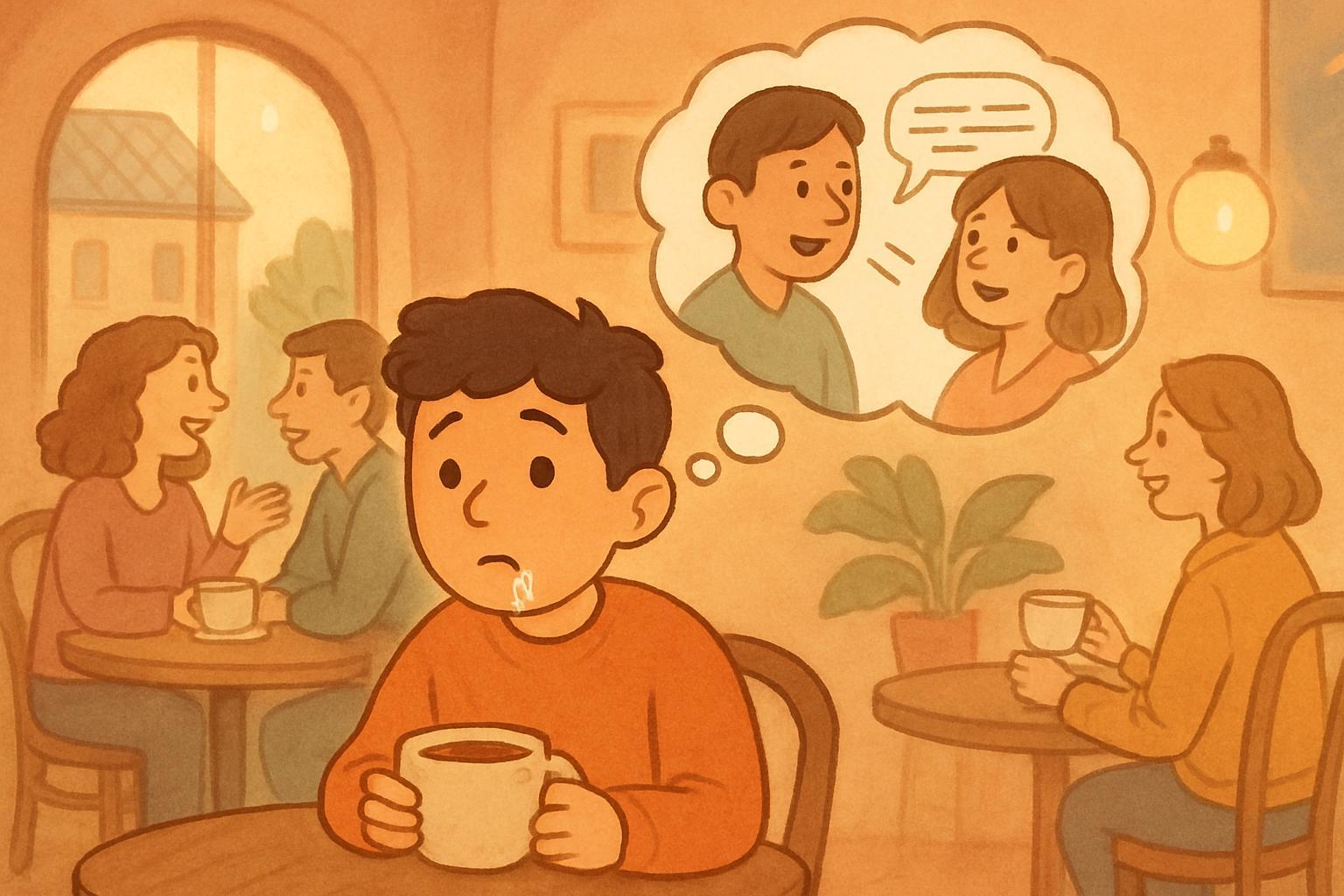
You have been studying Spanish for two years. You can follow a telenovela without subtitles, understand podcast hosts speaking at full speed, and read news articles with only occasional dictionary lookups. Then someone at a party asks “De donde eres?” and your mind goes blank. You know the answer. You have known it since week one. But the words will not come out.
This is not a failure of knowledge. It is a failure of activation, and it is so common among language learners that linguists have a name for it: the comprehension-production gap. A structured routine for practicing spoken Spanish with AI can help turn that passive knowledge into repeated output. Understanding why it happens, and what neuroscience says about fixing it, can save you months of frustration.
Two Brains, One Language
Your brain processes language through two fundamentally different systems. Neurolinguistic research distinguishes between declarative memory (facts, vocabulary, grammar rules you can consciously recall) and procedural memory (automated skills you perform without thinking, like forming sentences in your native language).
When you listen to a language, your brain is doing pattern recognition. It matches incoming sounds against stored patterns, fills in gaps from context, and assembles meaning from fragments. This is largely a passive, declarative process, and humans are remarkably good at it. You can recognize thousands of words you have never actively used.
Speaking is a completely different operation. Your brain must simultaneously select words, apply grammar rules, sequence them correctly, plan the sounds, and coordinate your mouth muscles, all in real time, with someone staring at you waiting for a response. This is procedural territory, and it requires a type of neural pathway that only develops through practice.
Here is the uncomfortable truth: comprehension and production use overlapping but distinct neural circuits. Training one does not automatically train the other. You can listen to a thousand hours of French and still freeze when asked to order a croissant.
Why Most Learning Methods Make This Worse
The modern language learning landscape is dominated by input-heavy methods. Podcasts, apps with listening exercises, YouTube channels, reading practice, grammar explanations. These are all valuable for building comprehension, and they feel productive because you can measure progress (I understood 80% of that episode!).
But they share a critical flaw: they never make you produce language under pressure.
Language acquisition research has consistently shown that output, actually generating language, activates different cognitive processes than input. When you speak, you notice gaps in your knowledge that comprehension hides. You discover that you do not actually know the past tense of a verb you have “known” for months. You realize your pronunciation of certain sounds has been wrong the whole time.
This is what linguist Merrill Swain called the “Output Hypothesis”: producing language forces a deeper level of processing than understanding it. It is the difference between recognizing a face and drawing it from memory.
The Anxiety Factor
The comprehension-production gap is not purely neurological. There is a powerful psychological component that makes everything harder.
When you understand a language well but speak it poorly, every conversation becomes an exercise in humiliation. You know exactly how wrong your sentences sound because your comprehension is good enough to hear your own mistakes. A true beginner is blissfully unaware of their errors. An intermediate learner with strong listening skills and weak speaking skills hears every stumble in excruciating detail.
This creates a vicious cycle. Speaking anxiety leads to avoidance, avoidance prevents practice, lack of practice widens the gap, and the wider gap increases anxiety. Many learners get permanently stuck here, retreating into the comfortable world of passive input where they feel competent.
What Actually Fixes It
The solution is straightforward, even if it is not easy: you have to speak. A lot. Badly, at first.
Volume over perfection. Your procedural language circuits need repetitions to develop. Twenty minutes of daily speaking practice, even with mistakes, builds neural pathways faster than two hours of weekly perfection. The goal is not to speak correctly from day one. The goal is to speak at all.
Embrace the ugly middle. There is a phase every speaker goes through where they sound like a toddler with a college vocabulary. You will use the wrong tense, forget common words, and construct sentences that would make your grammar teacher cry. This phase is not a sign of failure. It is the literal sound of procedural memory being built.
Remove the audience. If human judgment is what freezes you, remove the human. AI conversation partners exist precisely for this reason. They provide the pressure of real-time conversation without the social stakes. You can stumble, restart, and try again without anyone remembering your worst attempt.
Practice retrieval, not recognition. Stop reviewing vocabulary by looking at flashcards and recognizing the answer. Instead, try to produce the word before flipping the card. Better yet, try to use it in a sentence. Best of all, try to use it in a live conversation. Each step forces deeper processing and stronger memory encoding.
Talk to yourself. It sounds strange, but narrating your daily activities in your target language is one of the most effective solo practice methods. Describe what you see on your commute. Plan your dinner out loud. Argue with yourself about what to watch on TV. You are training your brain to activate vocabulary in real time without the added pressure of a listener.
The Timeline Is Shorter Than You Think
Here is the encouraging part. If you already understand a language, you are not starting from zero. All that passive knowledge is stored in your brain, waiting to be activated. On heritage language speakers shows that reactivating dormant language abilities can happen dramatically faster than building them from scratch.
Most learners who commit to daily speaking practice report a noticeable shift within two to four weeks. The first few days feel terrible. By week two, common phrases start flowing without conscious effort. By week four, you catch yourself thinking in the language for the first time.
The comprehension-production gap is not a wall. It is a bridge you have not walked across yet. Your brain already built one side. Now you just need to build the other, one awkward, imperfect sentence at a time.
The words are in there. Start letting them out.
Talk Your Way
to Fluency
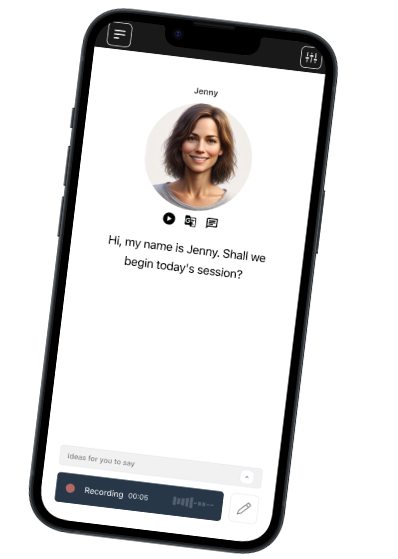
Talkio is the ultimate language training app that uses AI technology to help you improve your oral language skills!
Try Talkio